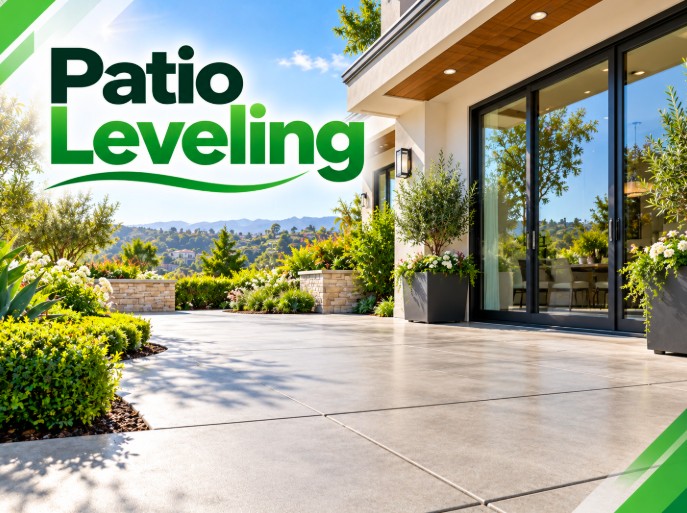
Patio Leveling in Los Angeles
A concrete patio should feel comfortable underfoot and provide a stable base for furniture, outdoor kitchens, grills, planters, and everyday backyard activities. When sections begin to sink or tilt, the patio can become difficult to use. Patio leveling is a way to correct settled concrete while preserving slabs that remain in good condition.
Restoring an Uneven Concrete Patio
Patios often sit close to landscaped areas, irrigation systems, roof drainage, and soil that was disturbed during home construction. These conditions can contribute to settlement beneath the concrete.
Signs that a patio may need leveling include:
- Slabs that slope unexpectedly
- Uneven joints
- Low spots after rainfall
- Patio furniture that no longer sits level
- Water moving toward the house
- Sunken sections near doors
- Changes in height around patio covers
- Gaps between the patio and adjoining concrete
The purpose of leveling is to improve the position and support of the existing slab rather than immediately removing it.
Why Patio Slabs Sink
Soil beneath a patio may gradually compress after years of use. Water can also move fine soil particles away from the slab, creating spaces underneath.
Downspouts, sprinklers, landscape drains, and overwatering can all affect the ground beneath outdoor concrete.
Settlement is also common near additions and renovated backyard areas where soil may have been disturbed before the patio was installed.
As support becomes uneven, the concrete can settle toward the weakened area.
Patio Leveling Near the House
Concrete that touches or approaches the home requires careful evaluation.
A patio ideally should direct normal surface water away from the structure. If a slab settles toward the building, rainwater or wash water may begin traveling in an undesirable direction.
Leveling may help restore a more suitable elevation, depending on the surrounding conditions and original layout.
Technicians must consider door thresholds, foundations, drains, adjoining walkways, and fixed structures before making adjustments.
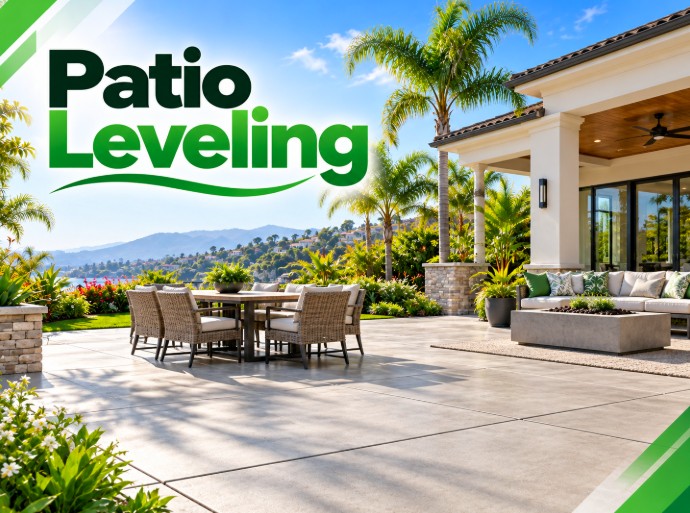
Outdoor Living Areas
Modern patios frequently contain more than a table and chairs. They may support:
- Outdoor kitchens
- Barbecue islands
- Fire features
- Pergolas
- Patio covers
- Seating areas
- Planter walls
- Spa access areas
- Entertainment spaces
These features can limit how much a slab can be moved and may require additional planning.
A proper leveling assessment looks at the entire patio rather than treating the affected slab as an isolated piece of concrete.
When Leveling Makes Sense
Patio leveling can be a good option when the slab remains relatively sound but has moved because of lost support underneath.
If the concrete is severely deteriorated, broken into many pieces, or damaged beyond practical repair, replacement may be more appropriate.
Existing cracks do not automatically rule out leveling. Their location, width, and overall slab condition should be considered during inspection.
Creating a More Comfortable Surface
Uneven patio concrete can make everyday outdoor use frustrating. Chairs wobble, tables lean, and rolling equipment becomes harder to move.
Leveling helps create a more consistent surface and can also improve the visual alignment of joints.
For homeowners investing in landscaping or outdoor living improvements, correcting settled patio concrete can help bring the surrounding space back into balance.
Patio Leveling for Different Property Types
We can evaluate concrete patios at:
- Single-family homes
- Multi-family properties
- Apartment communities
- Restaurants
- Hotels
- Clubhouses
- Commercial courtyards
- Rental homes
- Community recreation spaces
Every site has different drainage, soil, and access conditions.
Address Patio Settlement Before It Progresses
Concrete movement often develops gradually. A slight low area may become more noticeable as soil conditions continue changing.
If your patio has visible settlement, drainage changes, or uneven sections, a professional evaluation can determine whether the existing slab is a suitable candidate for leveling.
Our Patio Leveling Process
The first step is determining which areas have settled and identifying stable elevations nearby.
Once target positions are established, the slab can be carefully raised or adjusted using an appropriate concrete leveling technique.
Voids beneath the concrete may be filled as part of the process so the slab receives improved support.
Adjustments are made gradually because patio concrete may connect to walls, walkways, steps, drains, or other hardscape features.
- 1
Find the settled areas
We locate the sections that have moved and identify stable elevations nearby, including door thresholds and walls.
- 2
Plan around your features
Outdoor kitchens, fire features, pergola posts and planters are mapped so the lift works with them, not against them.
- 3
Raise gradually
The slab is adjusted step by step while voids underneath are filled to give the patio better support.
- 4
Check the drainage
We confirm water now moves away from the house and that joints line up for a cleaner finished look.
Patio Leveling Cost in Los Angeles
$3 – $8
per square foot
- Small patio or landingAbout 150 sq. ft.$450 – $1,200
- Mid-sized patioAbout 300 sq. ft.$900 – $2,400
- Large entertaining patioAbout 500 sq. ft.$1,500 – $4,000
What affects the price
- Size of the settled area
- Built-in features such as kitchens and fire pits
- Slope toward the house
- Door thresholds and drains
- Slab condition and cracking
Prices are typical Los Angeles ranges. Your exact price is confirmed after a free on-site visit.
Patio Leveling FAQs
How much does patio leveling cost?
Patio leveling in Los Angeles usually costs about $3 to $8 per square foot. A mid-sized patio of around 300 square feet often falls between $900 and $2,400. Built-in features such as outdoor kitchens, fire pits or pergola posts can add planning time. We provide an exact price after a free inspection.
Can you level a patio that slopes toward my house?
Often, yes. A patio that has settled toward the home can send rainwater toward the foundation. Leveling may restore a better slope away from the house, depending on door thresholds, drains and the original layout. We measure these points before making any adjustment.
Do I need to move my patio furniture?
Yes, it helps to clear furniture, planters and grills from the areas being leveled so the crew can reach the slab safely. Built-in features stay in place, and we plan the work around them. We will tell you ahead of time which areas need to be cleared.
Can a cracked patio still be leveled?
Existing cracks do not automatically rule out leveling. We look at the location and width of the cracks and the overall strength of the slab. If the concrete is broken into many pieces or badly deteriorated, replacement may be the better option, and we will explain why.
How long does patio leveling take?
Most residential patios are finished in a few hours. Larger patios or areas with outdoor kitchens and other built-in features can take longer because adjustments are made gradually. Your technician will let you know when the patio is ready to use again.
Get a Free Patio Leveling Estimate
Tell us about your concrete and we will schedule a free on-site inspection. You get a clear price before any work begins.
(213) 867-7935Mon – Sat: 7AM – 6PM