Can Concrete Leveling Help Fix Water Pooling Problems?
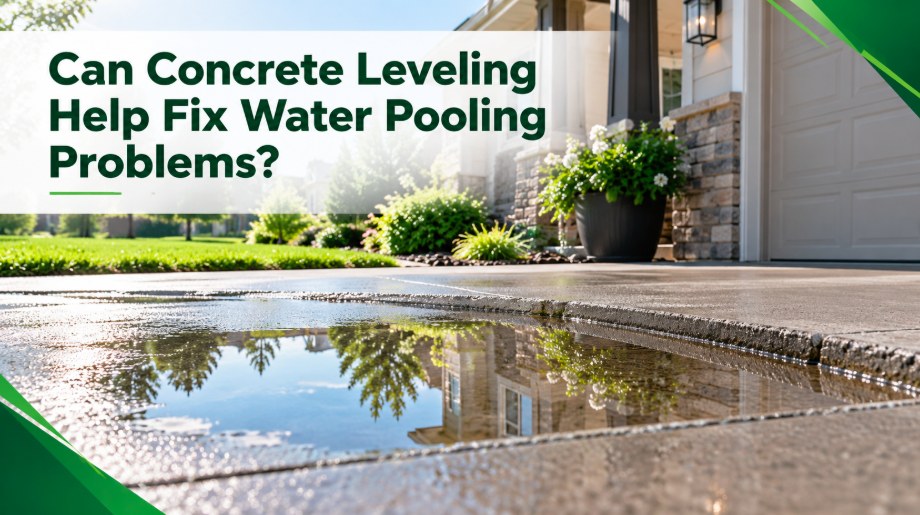
Concrete leveling can sometimes help correct water pooling when settlement has changed the original slope of the slab. However, the success of the repair depends on where the water is coming from and how the surrounding area is designed.
Concrete surfaces are typically installed with a slight slope so water moves toward a drain, street, gutter, yard, or another appropriate discharge area. When part of the slab sinks, a low spot may develop where water begins collecting.
This can happen on driveways, patios, sidewalks, pool decks, garage floors, and building entrances.
If settlement is the main reason for the low area, leveling the slab may improve the slope and help water move more naturally again.
However, concrete leveling is not a complete drainage solution in every situation.
Water may continue pooling if the property has inadequate drains, poor landscaping grades, blocked drainage paths, or runoff entering from surrounding areas. A slab can be perfectly level relative to nearby concrete and still receive too much water from another source.
That is why drainage should be evaluated before the slab is raised.
The location of doors, foundations, drains, sidewalks, curbs, and neighboring slabs must all be considered. Correcting one low area should not create a new drainage problem somewhere else.
In some cases, leveling and drainage improvements work best together.
If you regularly see puddles after rain or irrigation, note how long the water remains and where it enters the area. This information can help identify whether the problem is caused by settlement, drainage, or both.
Concrete leveling can be very useful for restoring proper slope, but the entire water-flow pattern should be considered during the repair.