What Is the Difference Between Mudjacking and Polyurethane Foam Leveling?
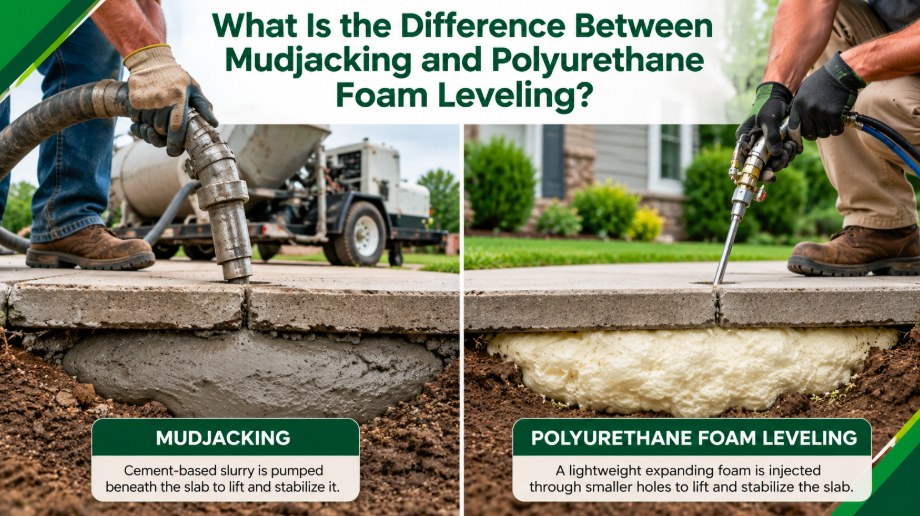
Mudjacking and polyurethane foam leveling are both methods used to raise sunken concrete, but they use different materials and techniques.
Mudjacking is a traditional process that typically involves pumping a cement-based or slurry mixture beneath a settled slab. The material fills empty spaces and creates pressure that helps lift the concrete.
This method has been used for many years and can be suitable for certain driveways, sidewalks, patios, and other slabs.
Polyurethane foam leveling uses a lightweight expanding material. Small access holes are created in the concrete, and the foam is injected beneath the slab. As it expands, it fills voids and can gradually raise the concrete.
One major difference is the weight of the material. Mudjacking mixtures are generally heavier, while polyurethane foam is much lighter. This can matter when the soil beneath the concrete is already weak.
Another difference is hole size. Foam systems often require smaller injection holes than traditional mudjacking methods.
The materials can also behave differently around water. Certain polyurethane products are designed to resist moisture and fill narrow voids effectively.
Neither method is automatically the best choice for every project. Slab size, soil conditions, drainage, access, budget, and the amount of settlement all influence the decision.
Severely damaged concrete may not be suitable for either type of leveling and could require replacement instead.
The best approach is to evaluate the slab and determine what caused the movement before choosing a repair method.
Both mudjacking and polyurethane leveling are intended to preserve existing concrete when the slab is still structurally usable.