Why Does Concrete Keep Sinking After It Has Already Been Repaired?
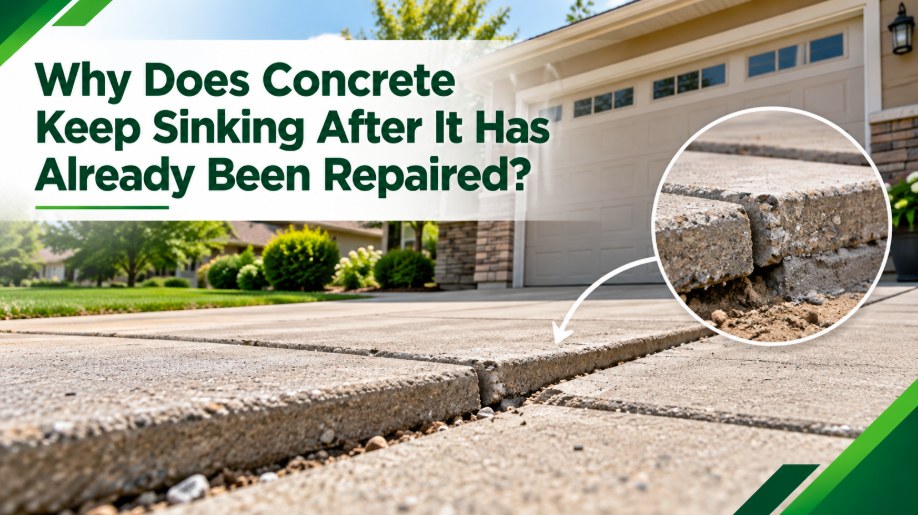
Concrete can sometimes begin sinking again after a previous repair, especially when the original cause of the settlement was never fully addressed. The problem is often not the concrete slab itself. In many cases, the real issue is the soil underneath it.
When soil becomes loose, washed out, poorly compacted, or repeatedly saturated with water, it can no longer provide consistent support. Even if the slab was lifted once, continued soil movement may allow it to settle again later.
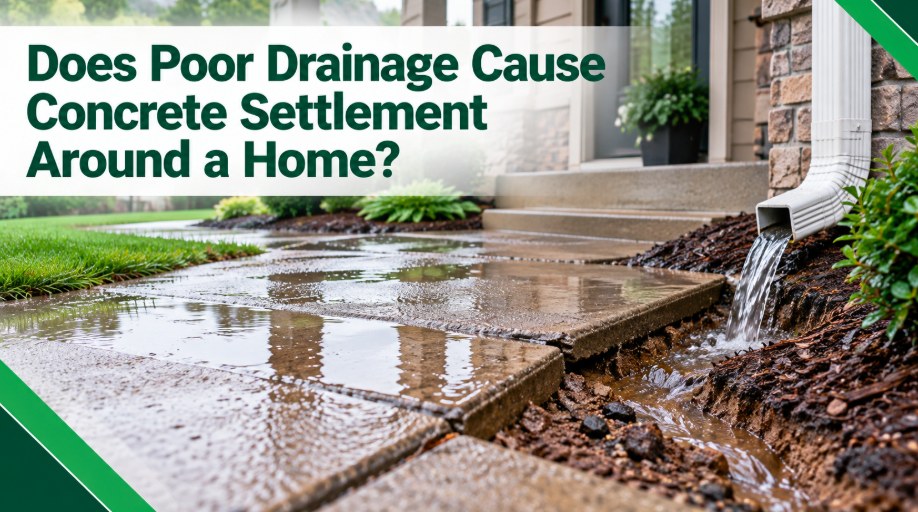
Drainage problems are one of the most common reasons this happens. Water from downspouts, irrigation systems, leaking pipes, or poor grading can gradually move soil away from beneath the slab. Over time, this creates voids that allow the concrete to drop.
Another possibility is that the previous repair focused only on raising the slab without improving the underlying support. Concrete leveling should not be treated as simply lifting a surface higher. The repair should also consider void filling, drainage, soil conditions, and the surrounding elevations.
Heavy loads can contribute as well. Driveways, parking areas, and garage floors experience repeated pressure from vehicles and equipment. If the base underneath the concrete is already weak, additional loading can accelerate settlement.
The age and condition of the slab also matter. Concrete that is heavily cracked or deteriorated may continue moving even after an earlier repair.
If previously leveled concrete begins sinking again, the best next step is a new evaluation. The area should be checked for water problems, soil loss, drainage patterns, and unsupported sections beneath the slab. Identifying the cause of continued movement gives the repair a better chance of lasting.