How Soon Can You Walk or Drive on Concrete After Leveling?
One advantage of many concrete leveling methods is that the repaired area may return to use much sooner than newly poured concrete. However, the exact waiting time depends on the material used, the size of the slab, and the type of traffic the surface will receive.
Some leveling systems allow light foot traffic relatively soon after the repair is completed. This can make them useful for sidewalks, patios, walkways, and entrances where long closures would be inconvenient.
Driveways and parking surfaces may require additional time before vehicles can return. A car places much more weight on the repaired slab than a person walking across it, so the supporting material needs to be sufficiently stable.
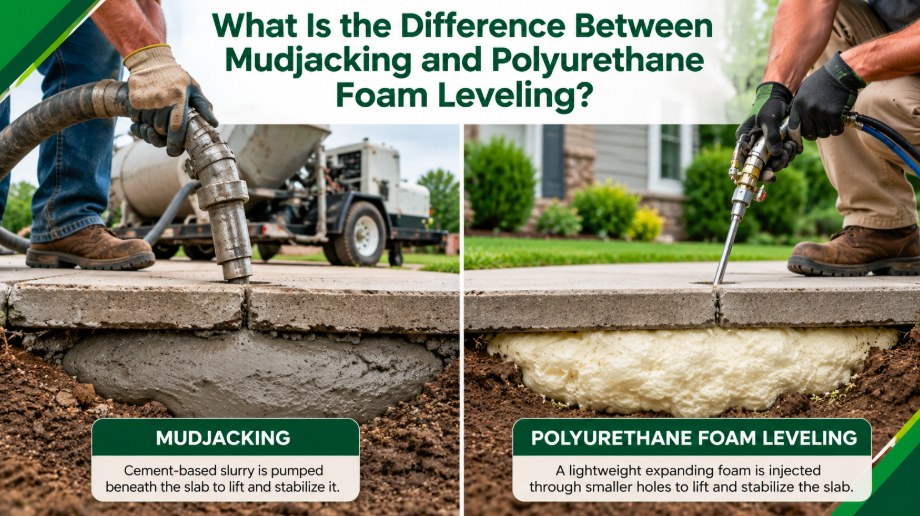
The contractor performing the work should provide specific instructions for the project. These instructions may vary depending on whether the repair uses polyurethane foam, cement-based material, or another leveling system.
It is important not to assume that a surface is ready simply because it looks finished. The visible concrete may be unchanged, but the new support underneath still needs to perform as intended.
Weather can also influence return-to-service time. Temperature and moisture conditions may affect certain materials differently.
For commercial areas, loading zones, garage floors, and high-traffic driveways, it may be wise to follow more conservative recommendations before allowing heavy use.
Compared with removing and repouring concrete, leveling often reduces downtime significantly because the existing slab stays in place.
Before the contractor leaves, ask when the area can safely handle pedestrians, vehicles, furniture, equipment, or other loads.
Following the recommended waiting period helps protect the repair and gives the supporting material the best opportunity to perform properly.