Can Tree Roots Cause Concrete Slabs to Become Uneven?
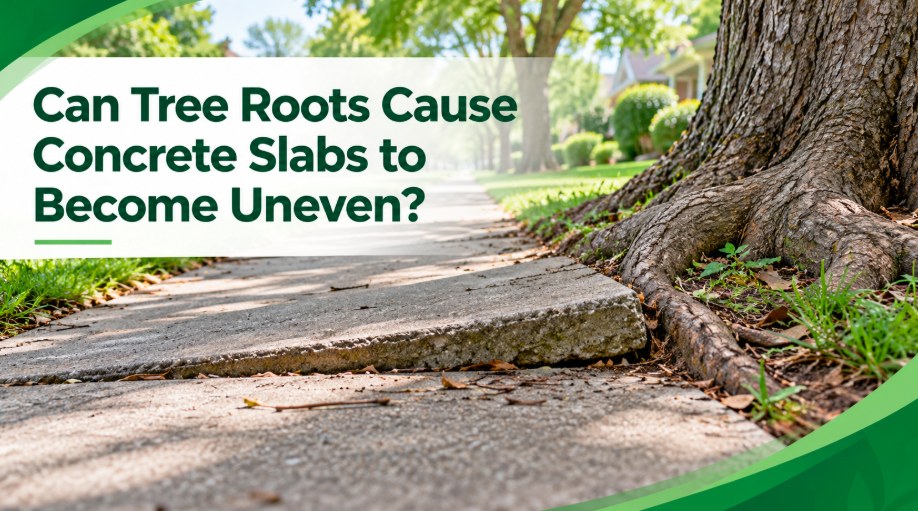
Yes, tree roots can contribute to uneven concrete, but the way they affect slabs can vary. In some cases, roots grow beneath sidewalks, patios, driveways, and other concrete surfaces and gradually push portions upward. In other situations, roots can influence soil moisture and create conditions that lead to settlement.
As roots expand, they may place pressure on the underside of a concrete slab. This can create raised joints, tilted sections, or cracking. Sidewalks located close to mature trees are especially vulnerable because their slabs are relatively small and often surrounded by landscaped soil.
Tree roots can also affect concrete indirectly. Large trees absorb substantial amounts of moisture from the surrounding ground. In certain soil conditions, changes in moisture can cause the soil to shrink, settle, or move unevenly. This can leave parts of the slab with less support than neighboring areas.
Another issue can develop when roots die or are removed. As old root systems decay, they may leave empty spaces in the soil. Concrete above those voids can gradually settle into the unsupported areas.
Not every uneven slab near a tree is caused by roots, however. Drainage, poor soil compaction, erosion, and age may also be responsible.
Before deciding on a repair method, the area should be evaluated carefully. Cutting or removing roots without considering the health and stability of the tree may create additional problems.
Concrete leveling can sometimes improve slabs affected by surrounding soil movement, but sections being actively pushed upward by major roots may require a different solution.
A proper inspection helps determine whether the concrete is sinking, being lifted, or experiencing a combination of both. Understanding the source of the movement is essential before making repairs.