Does Poor Drainage Cause Concrete Settlement Around a Home?
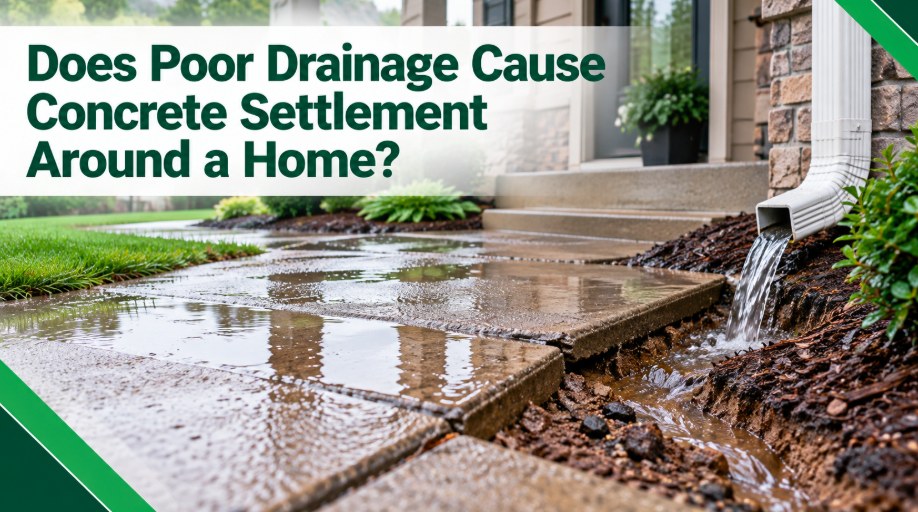
Poor drainage is one of the most common contributors to concrete settlement around residential properties. Concrete slabs depend on stable soil and base material for support. When too much water repeatedly reaches the soil beneath or around the concrete, that support can gradually change.
Water may wash fine soil particles away from beneath a slab. As these particles disappear, small voids can form under driveways, sidewalks, patios, steps, and other concrete surfaces. Eventually, the heavy slab can begin settling into the unsupported space.
Excess moisture can also soften certain types of soil. When the ground becomes saturated, it may compress more easily under the weight of the concrete.
Common sources of drainage problems include downspouts that discharge next to slabs, overflowing gutters, overwatering, broken irrigation lines, plumbing leaks, and yards that slope toward concrete areas rather than away from them.
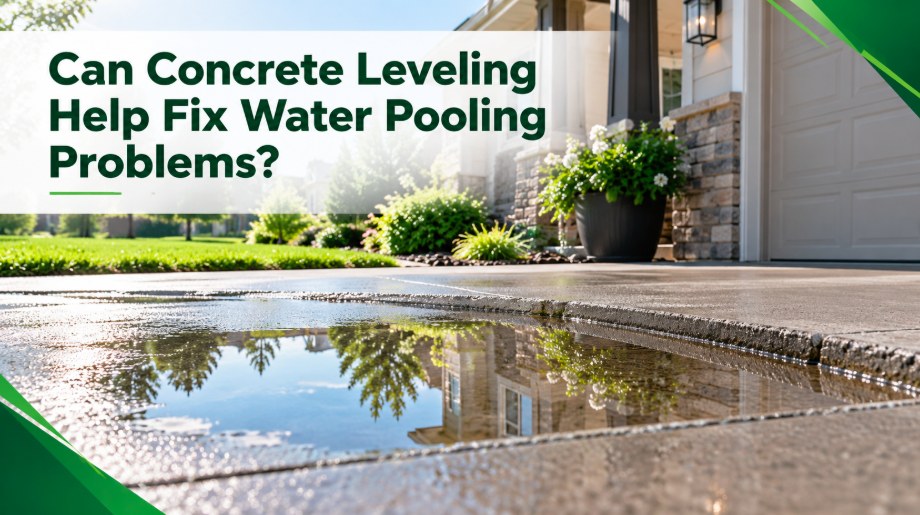
Poor drainage can also create visible warning signs. You may notice water standing beside a driveway, puddles on a patio, washed-out soil near a sidewalk, or recurring wet areas around a foundation.
Concrete leveling may correct the surface elevation, but drainage should also be addressed when water is contributing to the problem. Otherwise, the conditions that caused settlement can continue.
Solutions may include extending downspouts, improving grading, repairing leaks, adjusting irrigation, or adding drainage where appropriate.
The important point is that concrete settlement is often a symptom of what is happening below the surface. Fixing the elevation without considering water movement can lead to recurring issues.
If uneven concrete appears close to areas where water collects, a leveling inspection should include an evaluation of the nearby drainage conditions.