Can You Level Concrete During the Winter or Rainy Season?
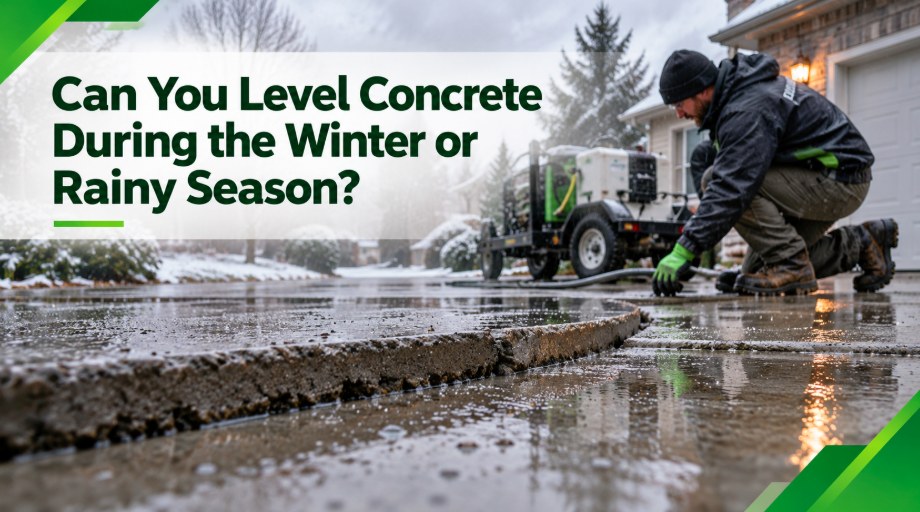
Concrete leveling can often be performed during cooler or wetter parts of the year, but weather and ground conditions can affect when the work should be scheduled. The most important factor is whether the site conditions allow the leveling material and equipment to be used properly.
Light seasonal weather does not automatically prevent concrete leveling. However, very heavy rain, standing water, saturated soil, freezing conditions, or severe storms can make the work less practical.
When the soil below a slab is extremely wet, it may be difficult to accurately evaluate how stable the base really is. Saturated ground can also continue moving after the repair if drainage problems are present.
Freezing temperatures can create additional concerns in colder climates. Some concrete leveling materials have temperature requirements for proper installation and curing. The exact limitations depend on the method being used.
In warmer regions, winter can actually be a convenient time for concrete repair because temperatures are often moderate. Rainfall, rather than temperature, may be the main scheduling consideration.
Before work begins, the contractor should inspect the site and determine whether the slab, soil, and surrounding area are suitable for leveling at that time.
If a major storm has recently passed, it may be useful to wait until excess water has drained and the area can be evaluated more accurately.
The goal is not simply to complete the repair as quickly as possible. The slab should be leveled under conditions that allow for controlled lifting and reliable support underneath.
If you are considering concrete leveling during winter or the rainy season, ask whether current ground conditions are suitable rather than assuming you must wait until summer.